Information |
|
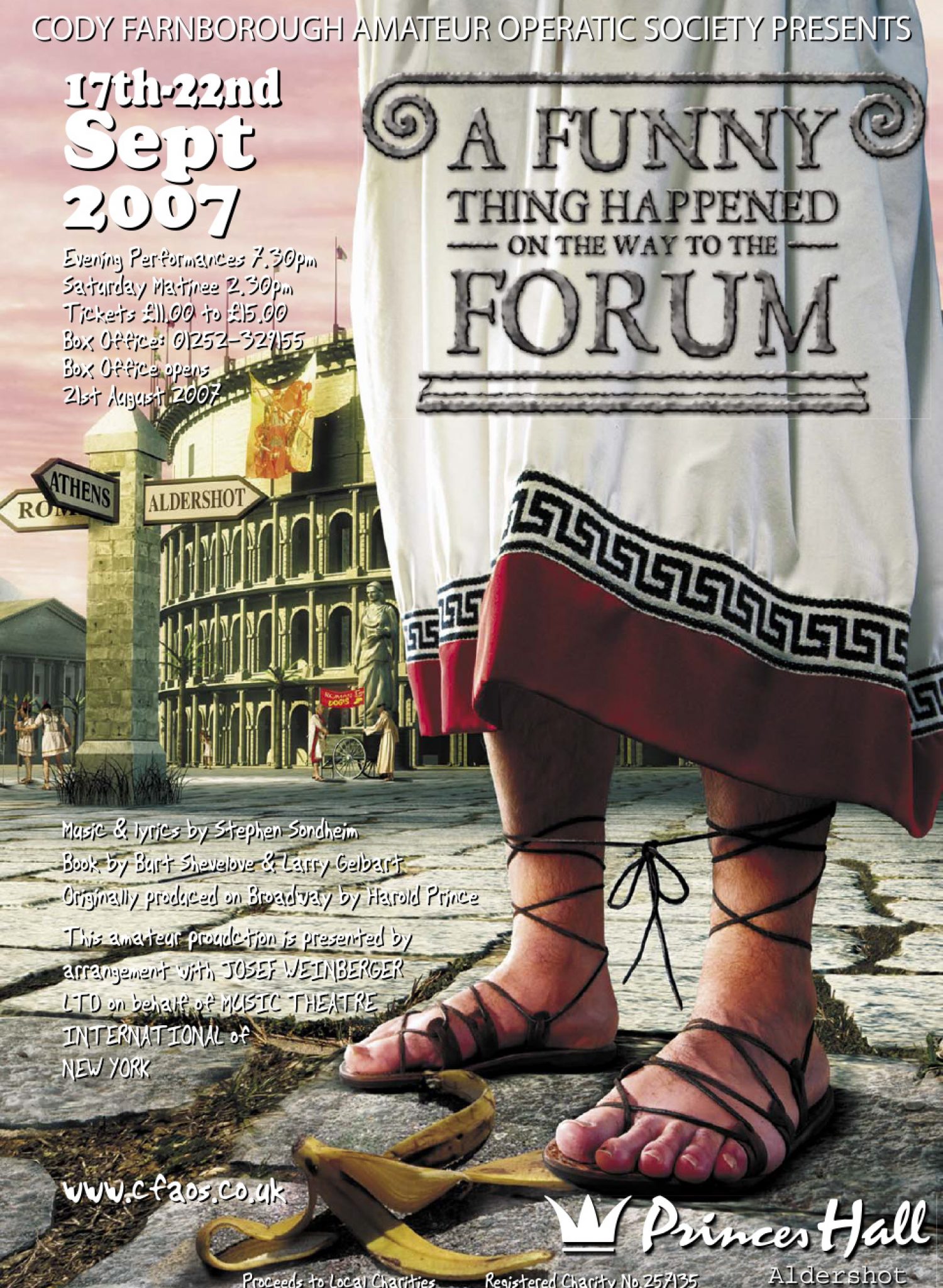
17th-22nd September 2007 |
|
![]() |
|
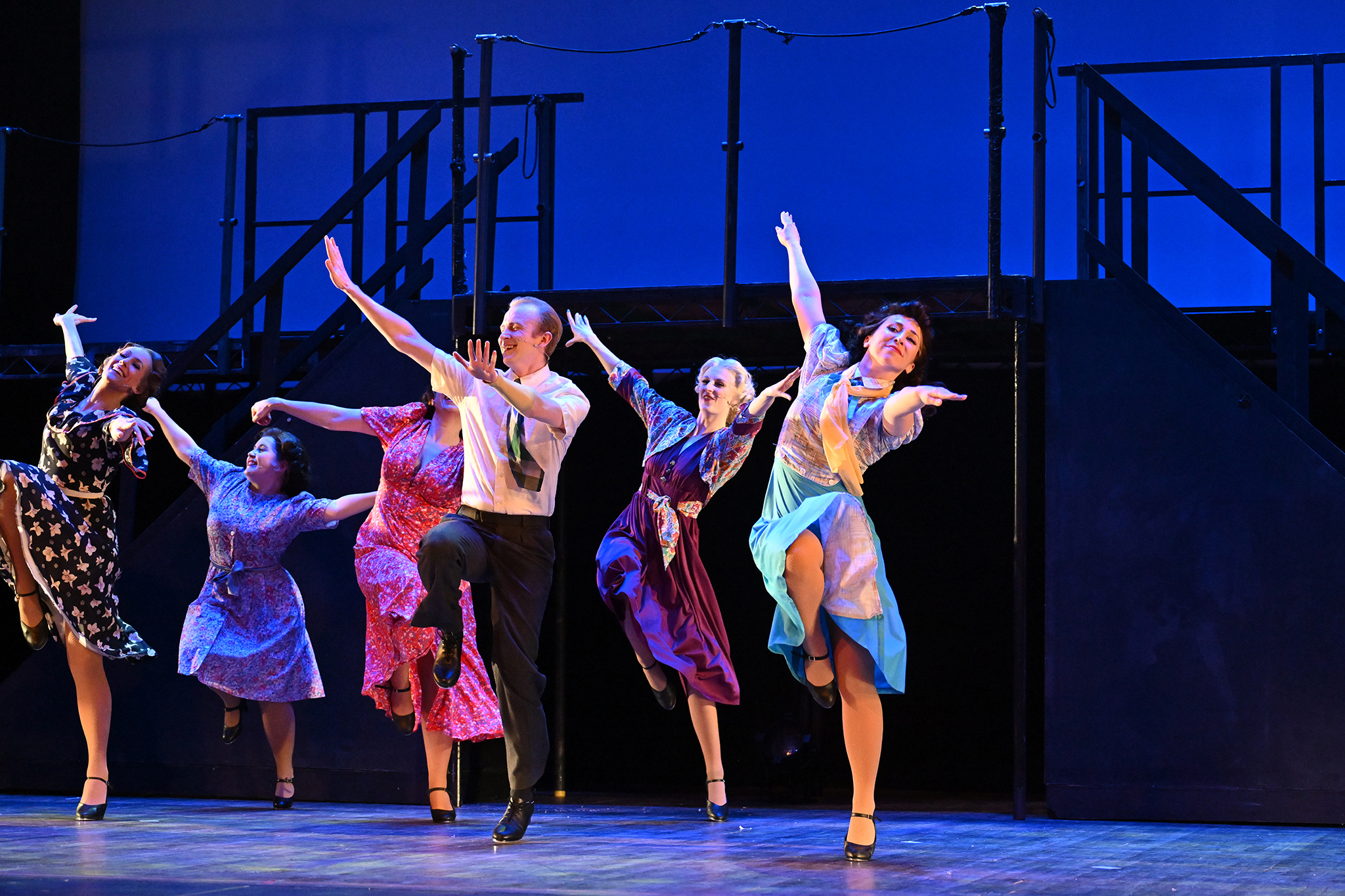
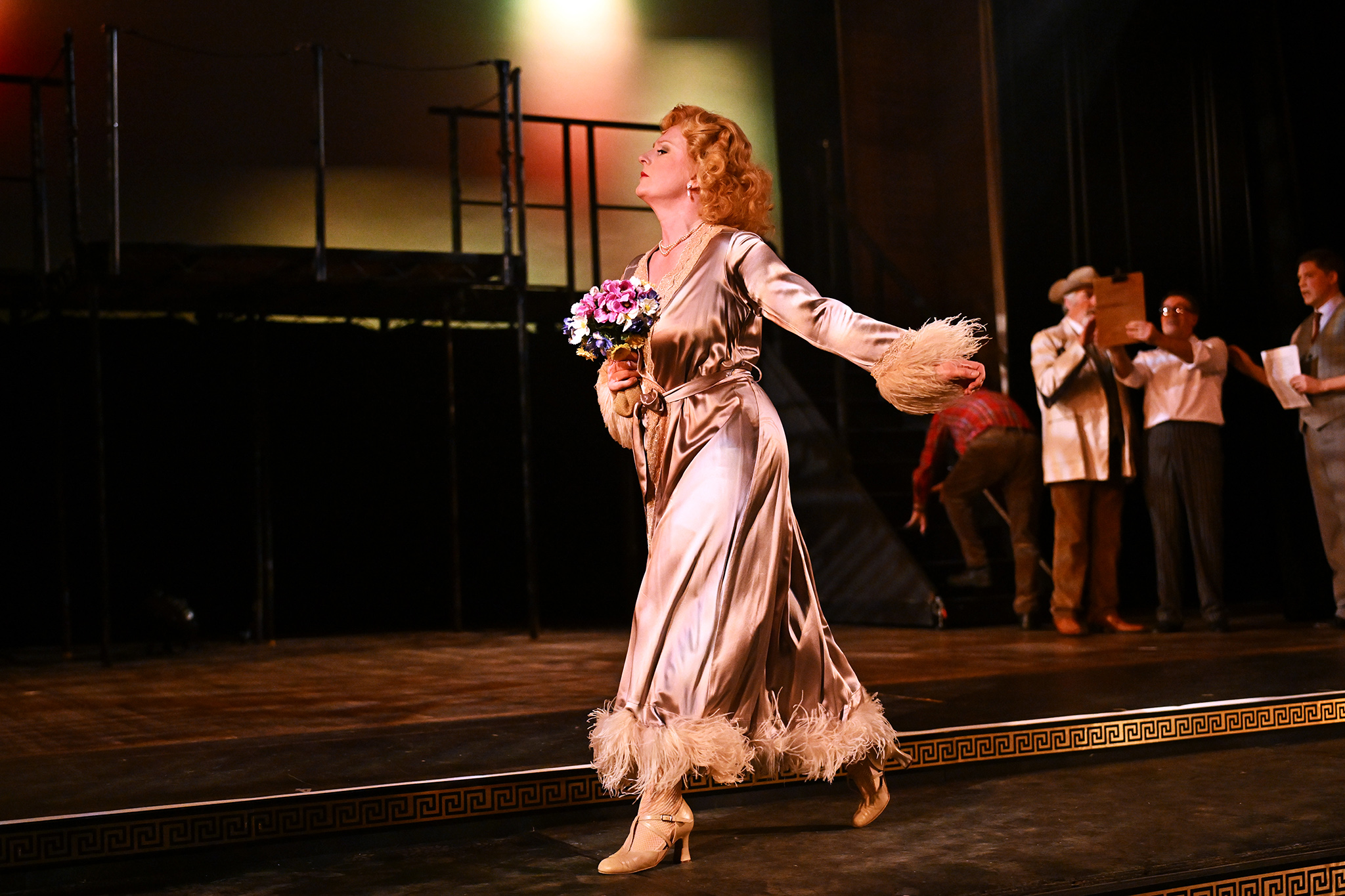
With its unforgettable zany characters, a hysterical, perfectly constructed book by Larry Gelbart (of “MASH” and “City Of Angels” fame) and Burt Shevelove, and witty Stephen Sondheim songs which are modest n their vocal demands, “A Funny Thing Happened On The Way To The Forum” allows a brilliant ensemble of comedic actors to shine. (The lead role of Pseudolus is one of the theatre's greatest roles – a tour de force for a clown par excellence.) And as if that weren't enough, its simple unit set makes “A Funny Thing Happened On The Way To The Forum” one of the easiest Broadway musicals to mount. A Funny Thing...ran for three years on Broadway with Zero Mostel as the cowardly slave, Pseudolus. The first British production, with Frankie Howerd, ran almost as long and spawned the TV series Up Pompeii! A Funny Thing...was only Sondheim's third musical and the first for which he wrote the score as well as the lyrics. On the first two, West Side Story and Gypsy, he had written lyrics only. It opened on Broadway in May 1962 and ran for 964 performances. |
|
|
|
Act One1. Overture |
Act Two 12. That Dirty Old Man |
SynopsisAct One
As the play begins, Senex and Domina are off to the country, leaving their slave Hysterium in charge of the moral welfare of their son, Hero. But Hero is advanced for his years and feeling strange. The reason? "Love, I Hear," he confides to the audience: what else makes you sigh, and hum a lot, too? The object of his affection is a courtesan at the house of Lycus, but, sadly, Hero has no convertible assets apart from his slippery slave. Maybe, figures Pseudolus, if he could engineer the young lovebirds' union, Hero would let him go Free. Free! A free man, free to write free verse, he muses. Pseudolus asks the procurer if they can see his stock. The charms of The House of Marcus Lycus are laid before slave and master, but Hero's heart's desire is, it seems, out of bounds. Philia is a virgin from Crete, pre-sold to the legendary warmonger Captain Miles Gloriosus, who has paid extra for virginity. Such a pity, tuts Pseudolus, about the highly contagious plague currently raging in Crete. Sportingly, he agrees to take her off Lycus' hands and thereby prevent her infecting the rest of the merchandise. So Philia and Hero meet at last. She cannot sew, cook, read or write; she has but one talent - being Lovely - but she's happy being lovely because it is a gift that she can give to Hero - if only she could remember his name. Already, though, Pseudolus is making plans: there's a boat anchored in the Tiber just made for two - what a Pretty Little Picture. But Philia says she has to wait for her new owner, the captain, and Pseudolus realises he will have to trick her onto the boat with a sleeping potion. Unfortunately, the recipe requires one ingredient he doesn't have: mare's sweat.
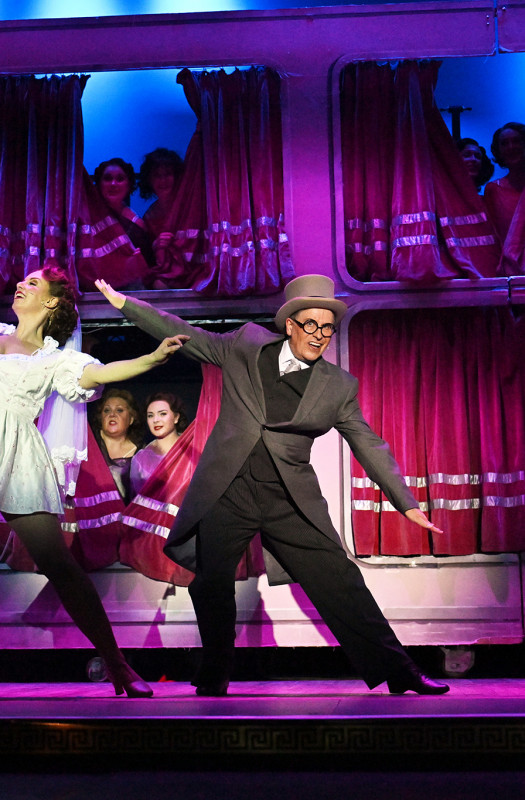
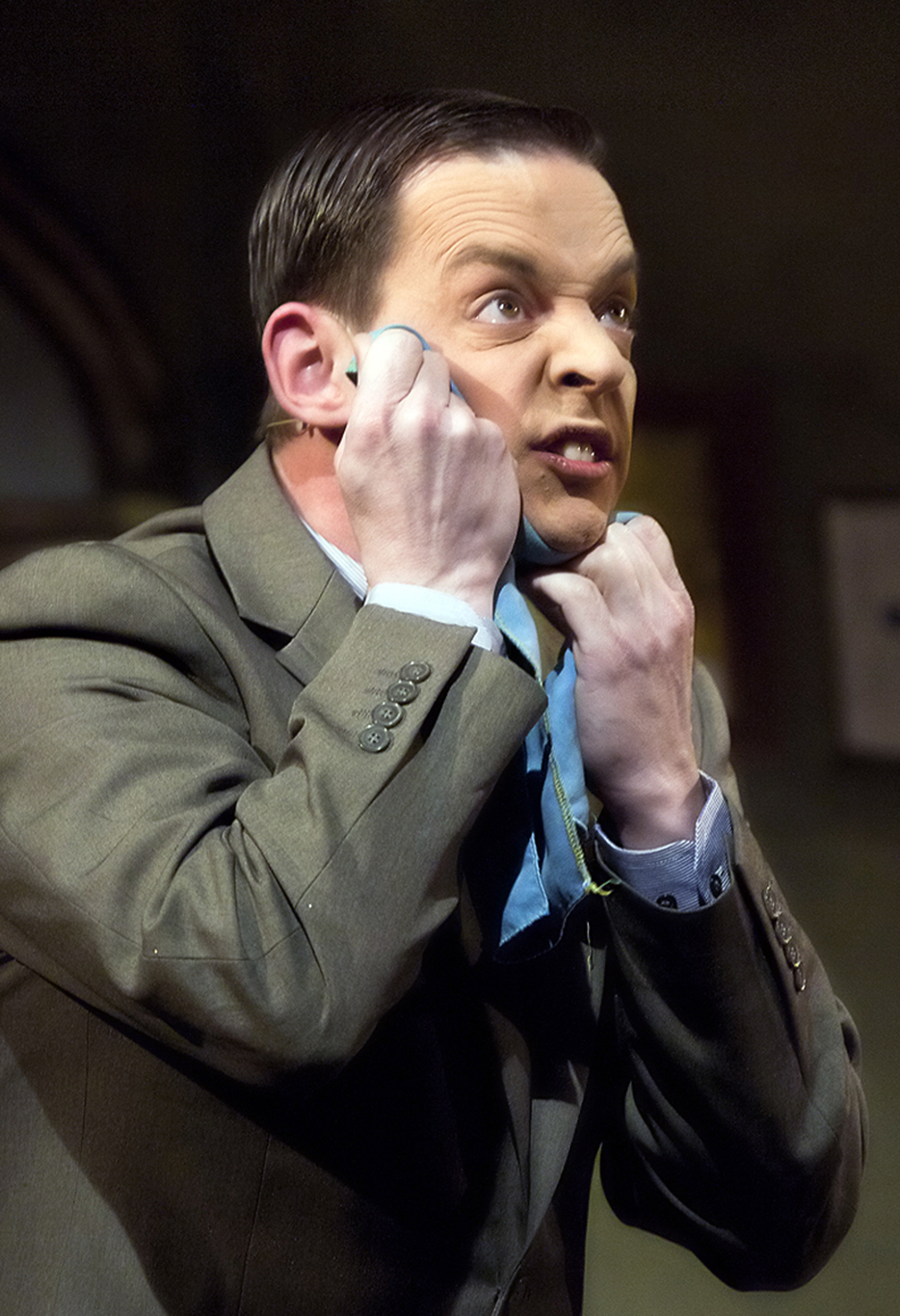
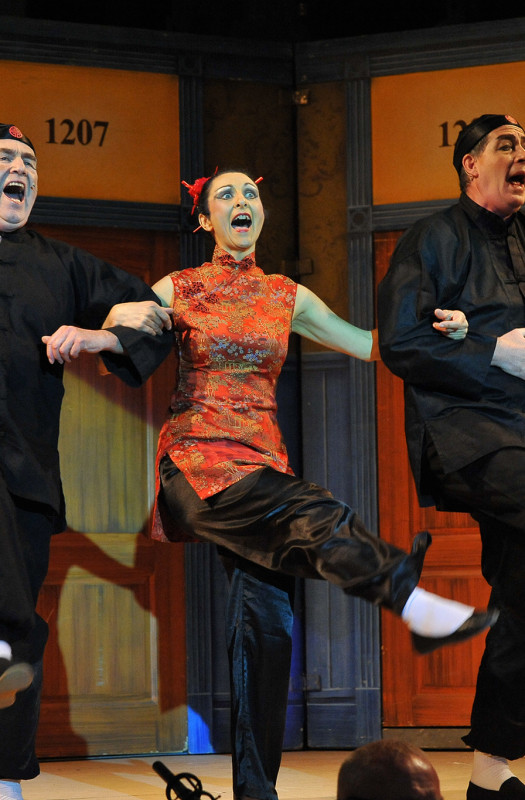
Act TwoBy now, even Pseudolus is having difficulty following the plot: Miles is being entertained in Senex's house (which he thinks is Lycus'), Senex is waiting in Erronius' house for Philia, Philia is refusing to drink Pseudolus' potion and Domina has returned in pursuit of 'That Dirty Old Man of Mine", convinced he's up to no good. Still under the impression that Senex is Miles, Philia reassures Hero that, whenever she makes love to her new husband, she'll really be making love to her true Hero - so she'll make love all the more intensely: That'll Show Him. Hero doesn't find this much consolation. Moreover, there is now a rival Philia: Hysterium has been dressed as a golden-tressed courtesan and told to play dead and look Lovely. Miles is distraught: his bride is deceased, but the least he can do is build a pyre for her Funeral. Soon, the stage is filled with Philias, fake and genuine, on the run from the menfolk - until the happy ending arrives: Philia is the long-lost daughter of Erronius and Miles the long-lost son; that makes them brother and sister, leaving Philia free to wed Hero and Pseudolus . free. It has, indeed, been a Comedy Tonight. |
|
TriviaStephen Sondheim - Biography Sondheim graduated from Williams College, where he received the Hutchinson Prize for Music Composition. After graduation he studied music theory and composition with Milton Babbitt. He worked for a short time in the 1950s as a writer for the television show Topper; his first professional musical theatre job was as the songwriter for the unproduced musical Saturday Night. He wrote the lyrics for West Side Story (1957), Gypsy (1959) and Do I Hear A Waltz? (1965), as well as additional lyrics for Candide (1973). Musicals for which he has written both music and lyrics include A Funny Thing Happened On The Way To The Forum (1962), Anyone Can Whistle (1964), Company (1970 - 1971 Tony Award Music and Best Lyrics), Follies (1971 - 1972 Tony Award Score and New York Drama Critics Circle Award; revised in London, 1987), A Little Night Music (1973 - Tony Award Score), The Frogs (1974), Pacific Overtures (1976 - New York Drama Critics' Circle Award), Sweeney Todd (1979 - Tony Award Score), Merrily We Roll Along (1981), Sunday In The Park With George (1984 - New York Drama Critics Circle Award; 1985 Pulitzer Prize for Drama), Into The Woods (1987 - Tony Award Score), Assassins (1991) and Passion (1994 - Tony Award Score). He composed the songs for the television production Evening Primrose (1966), co-authored the film The Last of Sheila (1973) and provided incidental music for The Girls of Summer (1956), Invitation to a March (1961) and Twigs (1971). Side By Side By Sondheim (1976), Marry Me A Little (1981), You're Gonna Love Tomorrow (1983; originally presented as A Stephen Sondheim Evening) and Putting It Together (1993) are anthologies of his work. He has written scores for the films Stavisky (1974) and Reds (1981), and composed songs for the film Dick Tracy (1990 - Academy Award for Best Song). He is on the Council of the Dramatist Guild, the national association of playwrights, composers and lyricists, having served as its president from 1973 until 1981, and in 1983 was elected to the American Academy of Arts and Letters. In 1990 he was appointed the first Visiting Professor of Contemporary Theatre at Oxford University. He was also recipient of a Kennedy Center Honor in 1993. For further information see either www.sondheim.com (International) or www.sondheim.org (UK) |
|